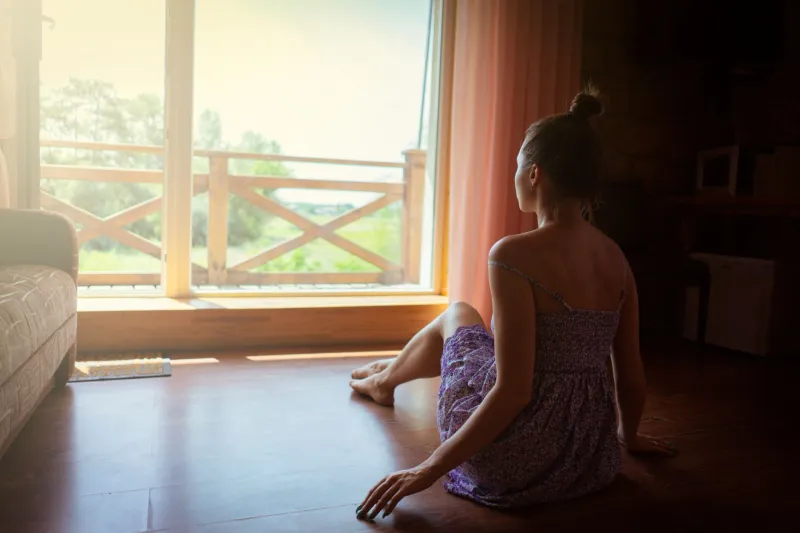
Why the Most Interesting People I Know Have the Most Predictable Saturdays
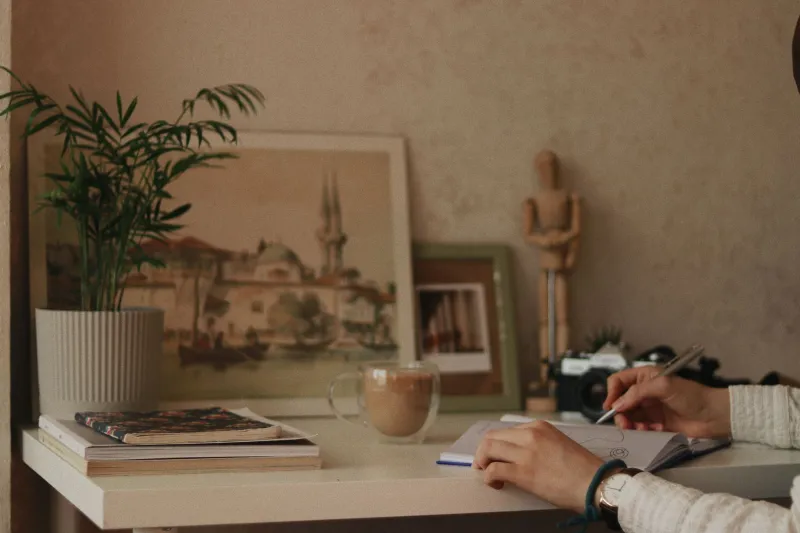
Let me tell you about my friend Dana.
Dana is, objectively, one of the most interesting humans I've ever encountered. She's a ceramicist who moonlights as a food writer, has opinions about everything from mid-century architecture to the correct way to salt pasta water, and can hold a dinner party table hostage with a single story. You'd assume her life looks like a highlight reel — spontaneous road trips, rotating brunch spots, a calendar that never repeats itself.
Her actual Saturday? Coffee at 7am, same mug, same chair. A two-mile walk on the same route through her neighborhood. Groceries from the same store she's been going to for six years. Home by noon. Work until four. Done.
Every. Single. Week.
When I asked her about it once, she laughed. "The boring stuff isn't the opposite of creativity," she said. "It is the creativity. I don't want to spend mental energy deciding where to walk. I want that energy for the work."
I've been thinking about that ever since.
The Hidden Tax of Keeping Things Interesting
We live inside a cultural story that says fascinating people lead visibly fascinating lives. That the interesting choice is always the spontaneous one — the new restaurant, the last-minute trip, the pivot, the shake-up. Staying the same, we're told, is a kind of creative death.
But here's what nobody mentions: novelty has a cost. Every decision you make — even a small one — draws from the same cognitive well. Researchers call it decision fatigue, and it's real. The more choices you process, the less sharp your judgment gets as the day wears on. This is why some of the most prolific creative minds in history were almost pathologically boring in their personal habits. Darwin took the same walk every afternoon. Maya Angelou rented a hotel room specifically to write in — bare walls, no distractions, same setup every time. Steve Jobs, for all his reputation as a visionary, famously wore the same outfit every day just to eliminate one decision from his morning.
These weren't people who lacked imagination. They were people who understood exactly where imagination lives — and it's not in your breakfast order.
Decision Minimalism Isn't Laziness. It's a Strategy.
There's a difference between being boring because you've stopped caring and being boring because you've gotten strategic about where your attention goes. The first is resignation. The second is, honestly, kind of a power move.
When you stop treating every daily choice as an opportunity for self-expression or optimization, something interesting happens: you get your brain back. The mental space that used to go toward "where should we eat" or "should I try a new gym" or "maybe I should reorganize my whole morning routine" gets quietly redirected. It pools somewhere useful. It shows up in your work, your conversations, your actual creativity.
This is what I'd call decision minimalism — not minimalism in the aesthetic, Instagram-worthy sense, but the practical act of automating the small stuff so the big stuff gets your full attention. It's less about having fewer things and more about having fewer open questions running in the background of your brain at any given moment.
And it turns out, the most interesting people are often the most ruthless practitioners of this.
The Paradox of the Predictable Creative
Here's what I keep noticing: the people who have the most to say, who make the most compelling work, who seem the most fully themselves — they're usually not the ones optimizing their lives for variety. They're the ones who've made peace with repetition.
The novelist who writes at the same desk every morning before her kids wake up. The photographer who takes his dog to the same park, same time, same bench — and somehow always comes back with something new. The designer who eats the same lunch four days a week because she genuinely doesn't want to think about it.
From the outside, this can look like a lack of ambition or imagination. From the inside, it feels like clarity. Like you've stopped leaking energy through a hundred tiny holes and started directing it somewhere that actually matters.
There's also something quietly countercultural about it. In a world that rewards visible novelty — the new project, the rebrand, the pivot, the trip that makes a great story — choosing the same walk, the same coffee, the same Saturday rhythm is almost a radical act. It says: I know where my good ideas come from, and it's not from keeping things fresh. It's from going deep.
The Part Where This Gets Personal
I'll be honest: I resisted this for a long time. I grew up thinking that interesting people had interesting lives, and that meant constantly seeking out new experiences, new places, new versions of yourself. Staying still felt like falling behind.
What I've slowly figured out is that the seeking was often just noise. A way of performing curiosity rather than actually practicing it. Real curiosity — the kind that produces something — tends to happen in the quiet, in the repeated, in the space you've kept deliberately empty.
My most reliable creative days are the ones that start exactly the same way. Same coffee, same playlist, same twenty minutes of nothing before I open my laptop. Not because I'm boring (I hope), but because I've learned that my brain needs the signal. This is the time. This is the space. Let's go.
The routine isn't the cage. It's the launchpad.
So What Does This Actually Look Like?
If you're someone who's been quietly exhausted by the pressure to keep your life looking interesting, here's a gentle permission slip: you can stop.
You can pick a morning routine and just... keep it. You can go to the same coffee shop, order the same thing, sit in the same spot. You can have a standing Saturday plan that doesn't make for a great Instagram caption and genuinely not care. You can let the small stuff be small.
Because here's the thing about the most interesting people I know — Dana included: they're not interesting despite their boring choices. They're interesting because of them. The predictability of their days is what creates the depth in everything else. The sameness is what makes the work different.
Your creativity doesn't need a new backdrop. It needs your full attention. And sometimes the fastest way to give it that is to stop making everything else so interesting.
Same mug. Same chair. Same walk.
And then — something entirely new.