You Don't Need a Reason to Show Up: Rebuilding the Places That Used to Hold Us
There's a specific kind of loneliness that doesn't look like loneliness. It looks like a full calendar, a group chat that never sleeps, and a Saturday where you talk to exactly zero humans face to face. You're not isolated. You're just... never with anyone.
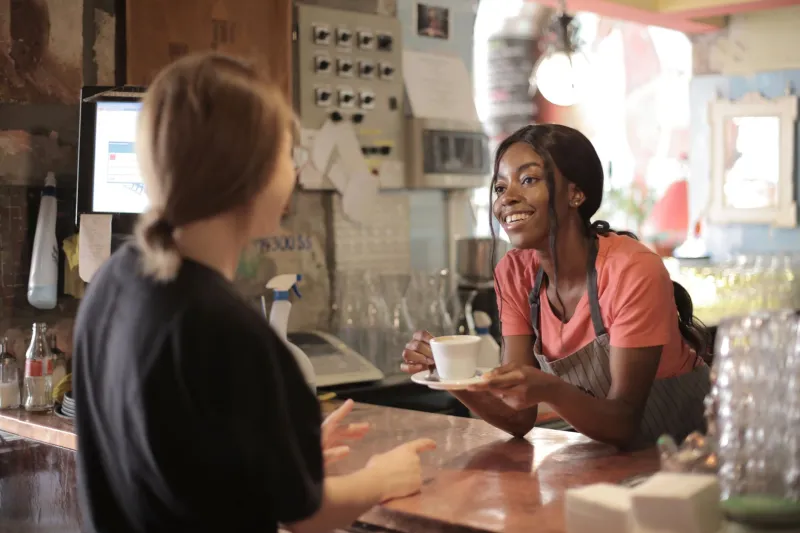
I've been thinking a lot lately about a concept sociologist Ray Oldenburg coined back in 1989: the "third place." Not home, not work — the in-between spots where life used to happen on its own. The diner counter. The bar where the bartender knew your name before Cheers made it a punchline. The rec center basketball court, the church basement, the barber shop, the mall fountain where teenagers loitered with total permission.
Those places did something no app has managed to replicate. They held us without requiring anything of us.
What We Lost When Everything Became a Destination
Here's the thing about third places: nobody scheduled them. You didn't RSVP to the coffee shop. You didn't need a reason to sit on the same park bench every Tuesday. Regulars just... accumulated. Familiarity happened sideways, through repetition, until the stranger at the next table became the person who saves you a seat.
Compare that to how friendship works now. Everything is a plan. Everything is a calendar invite, a two-week-out dinner reservation, a coordinate-our-schedules negotiation. We've traded casual presence for intentional logistics, and the intimacy of unplanned company has mostly evaporated.
The numbers back up the vibe. Surgeon General Vivek Murthy flagged loneliness as a public health crisis back in 2023, comparing its health toll to smoking fifteen cigarettes a day. And researchers like Daniel Cox at the Survey Center on American Life have tracked the steep decline of the neighborhood hangout — fewer of us know our neighbors, fewer of us have a regular spot, and the number of Americans reporting no close friends has climbed dramatically in a generation.
We didn't just lose the places. We lost the version of ourselves that existed inside them.
Why Your Group Chat Doesn't Count
Look, I love a group chat as much as anyone. But digital connection runs on a different fuel than physical proximity. Online, you curate. You post the highlight, you craft the take, you manage the version of yourself people see. It's performance with better lighting.
A third place demands something rawer: your body, in a room, on a random Wednesday, with nothing interesting to say. That sounds like a downside. It's actually the entire point. Being known in your unremarkable moments — the tired ones, the unshowered ones, the ones with no content value — is what turns acquaintances into people.
That's why showing up online can never fully substitute for showing up in person. The internet knows your opinions. A third place knows your face when you walk in.
The New Third Places (They Look Different Now)
The good news: the third place isn't dead. It's just migrated. And the people rebuilding it tend to be the ones who decided waiting for community to organize itself was a losing strategy.
A few formats that are quietly working right now:
Run clubs. The phenomenon is real — city run clubs from Austin to Brooklyn have become the new happy hour, partly because they require zero skill to start and zero small talk to sustain. You just run. Conversation happens if it wants to.
Reading rooms and silent book clubs. Libraries and indie spaces are hosting events where the entire activity is sitting together, separately. It's community for people who find community exhausting. Genius, honestly.
Recurring, low-stakes meetups. A weekly trivia night at the same bar. A standing Saturday morning at the same farmers market. The repetition is the magic — familiarity needs a rhythm.
The neighborhood gym or rec center. Not the app-based boutique studio where you're in and out with headphones on, but the place where the same faces orbit the same squat racks at the same time.
Notice the pattern? None of these require an invitation. They require attendance.
The Uncomfortable Part: You Have to Go Without a Reason
This is where most of us bail. Showing up somewhere for no reason feels weird at first. You feel like an extra in someone else's scene. You wonder if people can tell you came alone.
They can. That's fine. Everyone in every third place started as the person who came alone.
So here's the practical version: pick one spot. One recurring thing. Same time, same place, no agenda, for at least two months before you evaluate it. Bring a book as a security blanket if you need one. Say hi to the same barista. Learn one regular's name. Resist the urge to optimize it into content or a networking opportunity — that's how you kill the thing that makes it work.
Belonging was never something you could download. It's something you build by being somewhere, over and over, until the place starts expecting you. Weirdly, that's also the most honest personal branding there is: becoming a regular in your own life.
The third place isn't dead. It's just waiting for you to walk in.